What Can Rabbits Eat?
|
|
Healthy Foods For Rabbits Listed Below!
Hay and grass should form the basis (80%) of your rabbits’ diet. The remainder of your rabbits’ diet should be fresh vegetables (15%) and a small amount of pellets (around 5%).
1 Grass Hay, Alfalfa Hay
Trees: Mulberry Leaves and Branches
Vegetables that can be fed to a rabbit daily:
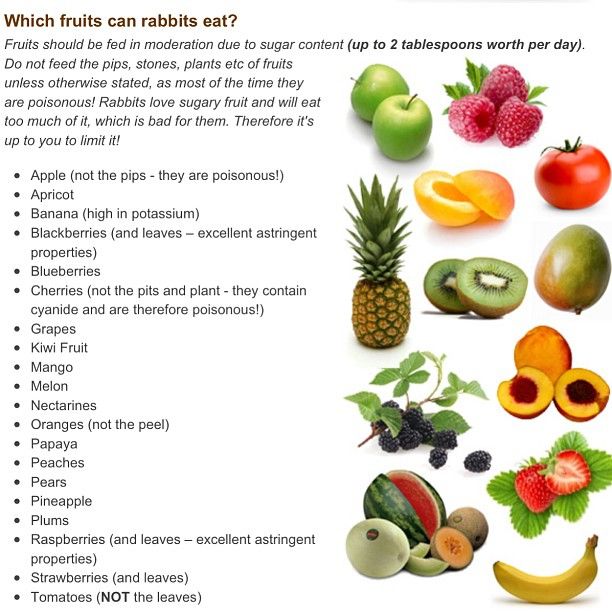
Fruit to feed your rabbit (one or two times a week):
Always read the ingredient list on store-bought treats because not all of them are safe for bunnies. Avoid treats that include added sugar, preservatives and artificial coloring, and never give your rabbit human treats.
Foods to avoid giving a rabbitSome foods are not good for rabbits under any circumstances because they can make rabbits extremely sick.
Here are foods to avoid giving your bunny completely:
Fresh water: Unlimited supply for a bunnyFinally, rabbits need to stay hydrated, so they should have an unlimited supply of fresh water, which should be changed daily. The water container should be cleaned with soap and water every few days. Water bottles are not easy to clean and can be difficult for rabbits to use, so bowls are better. A heavy ceramic bowl is ideal, since it doesn’t tip over easily.
SEE INFO SOURCE HERE:
Hay and grass should form the basis (80%) of your rabbits’ diet. The remainder of your rabbits’ diet should be fresh vegetables (15%) and a small amount of pellets (around 5%).
1 Grass Hay, Alfalfa Hay
Trees: Mulberry Leaves and Branches
Vegetables that can be fed to a rabbit daily:
- Bell peppers
- Bok choy
- Brussels sprouts
- Carrot tops
- Cucumber
- Endive
- Escarole
- Fennel
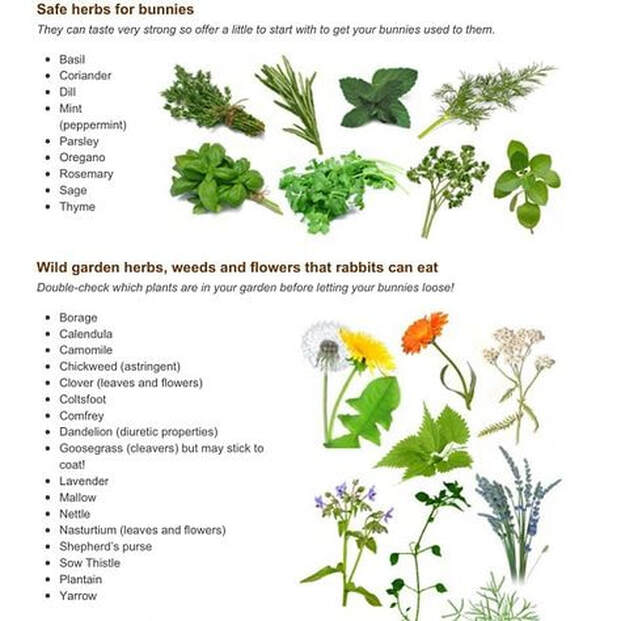
- Herbs: basil, cilantro, dill, mint, oregano, parsley, rosemary, sage, thyme
- Lettuces: romaine, green leaf, red leaf, Boston bibb, arugula, butter
- Okra leaves
- Radicchio
- Radish tops
- Sprouts: alfalfa, radish, clover
- Watercress
- Wheatgrass
- Zucchini
- Broccoli (stems and leaves only)
- Carrots
- Chard
- Clover
- Collard greens
- Dandelion greens (pesticide-free)
- Flowers: calendula, chamomile, daylily, dianthus, English daisy, hibiscus, honeysuckle, marigold, nasturtium, pansy, rose
- Kale
- Spinach
Fruit to feed your rabbit (one or two times a week):
- Apple (no seeds)
- Banana
- Berries: blueberries, blackberries, strawberries, raspberries, cranberries
- Cherries (no seeds)
- Grapes
- Melon
- Nectarine
- Orange
- Papaya
- Peach
- Pear
- Pineapple
- Plum
- Watermelon
Always read the ingredient list on store-bought treats because not all of them are safe for bunnies. Avoid treats that include added sugar, preservatives and artificial coloring, and never give your rabbit human treats.
Foods to avoid giving a rabbitSome foods are not good for rabbits under any circumstances because they can make rabbits extremely sick.
Here are foods to avoid giving your bunny completely:
- All human treats
- Beans
- Beet greens
- Cabbage
- Cauliflower
- Cereal
- Chocolate
- Corn or corn-cob treats
- Crackers
- Iceberg lettuce
- Legumes
- Mustard greens
- Nuts
- Pasta
- Peas
- Potatoes
- Rhubarb
- Seeds
- Sugar
- Turnip greens
- Yogurt
Fresh water: Unlimited supply for a bunnyFinally, rabbits need to stay hydrated, so they should have an unlimited supply of fresh water, which should be changed daily. The water container should be cleaned with soap and water every few days. Water bottles are not easy to clean and can be difficult for rabbits to use, so bowls are better. A heavy ceramic bowl is ideal, since it doesn’t tip over easily.
SEE INFO SOURCE HERE:
